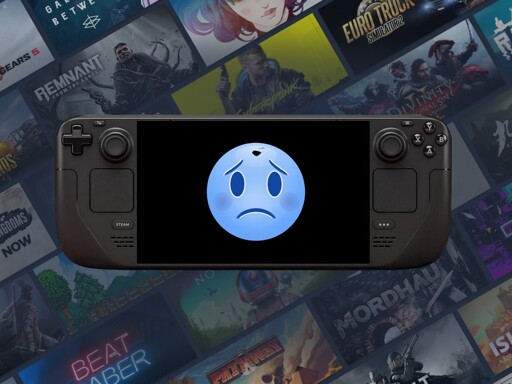
Buyers who were procrastinating about purchasing a Valve gaming handheld are feeling regretful. The Steam Deck OLED has disappeared from the U.S. storefront, with stock levels sporadic elsewhere. Facing component shortages, the manufacturer may be considering a price increase.
I mean, I don’t have any direct sources on hand to refute that, but that logic doesn’t pass the sniff test, at least to me.
The Deck is an incredibly successful product that constantly sits near the top of the “all sales” chart, is incredibly important for Valve to keep computing open (and not lose their entire business model to Windows’ enshittification), and has virtually 0 overlap with any of the products coming out.
If anything, I’d expect them to cancel the GabeCube before the Deck, at least until the Deck has a successor.
If you’re familiar with the logistics of the components industry, you might understand.
You’re completely glossing over the connection between these things. New hardware line coming out this month-ish(?). They also want it to be successful. The product overlap is with the Frame, Switch 2, Arm devices at large, and the myriad other handhelds trying to copy the success of Deck.
Now, if you’re Valve, your bread and butter isn’t the devices, it’s platform lock-in. More devices running Steam means more money, regardless of the device itself. This is why they’ve taken the time to make sure SteamOS was portable enough to run on a bunch of other devices, which is the big note here.
They’re thinking platform, you’re only concerned with a single piece of hardware that had a miniscule impact on their bottom line. They make BILLIONS in pure profit every year ust from platform engagement. Deck made them millions over four years. That’s the difference.
So what makes more sense? More Deck models, or more devices spreading into a larger ecosystem to gain further footholds into platform engagement?
Deck honestly doesn’t factor much into that. Frame and FEX however is going to be monumental shift into a massive expansion of Steam on ARM, and will probably ultimately mean if there is another Deck, it’s also going to be ARM. It’s a much bigger picture than all the comments in here are putting together.
I work for a HW OEM and while SoC availability certainly dictates the availability of a product line, there’s usually an opportunity for “last time buys” with plenty of notice in an instance where that part was going EOL. It’s unlikely that valve was caught off guard by the planned discontinued parts.
It’s also unlikely that they would like to deliberately make a successful and popular product unavailable without officially discontinuing it to promote other, yet to be released, products that have little to no overlap in use case. That makes no sense.
If a Deck 2 were about to be released, this would make sense. But it’s not, and so this is probably unplanned parts shortage causing the deck to being of stock.


I mean, I don’t have any direct sources on hand to refute that, but that logic doesn’t pass the sniff test, at least to me.
The Deck is an incredibly successful product that constantly sits near the top of the “all sales” chart, is incredibly important for Valve to keep computing open (and not lose their entire business model to Windows’ enshittification), and has virtually 0 overlap with any of the products coming out.
If anything, I’d expect them to cancel the GabeCube before the Deck, at least until the Deck has a successor.
If you’re familiar with the logistics of the components industry, you might understand.
You’re completely glossing over the connection between these things. New hardware line coming out this month-ish(?). They also want it to be successful. The product overlap is with the Frame, Switch 2, Arm devices at large, and the myriad other handhelds trying to copy the success of Deck.
Now, if you’re Valve, your bread and butter isn’t the devices, it’s platform lock-in. More devices running Steam means more money, regardless of the device itself. This is why they’ve taken the time to make sure SteamOS was portable enough to run on a bunch of other devices, which is the big note here.
They’re thinking platform, you’re only concerned with a single piece of hardware that had a miniscule impact on their bottom line. They make BILLIONS in pure profit every year ust from platform engagement. Deck made them millions over four years. That’s the difference.
So what makes more sense? More Deck models, or more devices spreading into a larger ecosystem to gain further footholds into platform engagement?
Deck honestly doesn’t factor much into that. Frame and FEX however is going to be monumental shift into a massive expansion of Steam on ARM, and will probably ultimately mean if there is another Deck, it’s also going to be ARM. It’s a much bigger picture than all the comments in here are putting together.
Sorry dude, you’re just incredibly wrong.
I work for a HW OEM and while SoC availability certainly dictates the availability of a product line, there’s usually an opportunity for “last time buys” with plenty of notice in an instance where that part was going EOL. It’s unlikely that valve was caught off guard by the planned discontinued parts.
It’s also unlikely that they would like to deliberately make a successful and popular product unavailable without officially discontinuing it to promote other, yet to be released, products that have little to no overlap in use case. That makes no sense.
If a Deck 2 were about to be released, this would make sense. But it’s not, and so this is probably unplanned parts shortage causing the deck to being of stock.